"I Cannot"
How God Worked When Strength Was Taken Away

May 29, 2024, was a day of extremes. It was the day of my hemicolectomy (a surgery to remove my primary neuroendocrine tumor and the surrounding tissue). I began the day focused on what I had prepared to do. The day began with great optimism and joy. I ended the day confronted with the blunt realities of physical and spiritual limitations. The phrase “I cannot” cast it shadow over nearly every facet of my life.
Preparation for surgery began the moment I had been admitted to the hospital. My diet was restricted. Lab tests were ordered. A cocktail of sports drink and laxatives was mixed to clean out my intestines and reduce risk of infection.
Spiritual preparation was also underway. In addition to the graces God had already been sending, a priest friend came to hear my confession and administer sacramental anointing. Beth and I spent time in prayer together. Friends came to visit and pray as well.
I was given special instructions for showering the night before surgery. The hospital tech would carefully change all of my linens while I showered. I could no longer wear my own clothes. Infection control was now the predominant concern. It would be “designer” gowns from here on out.
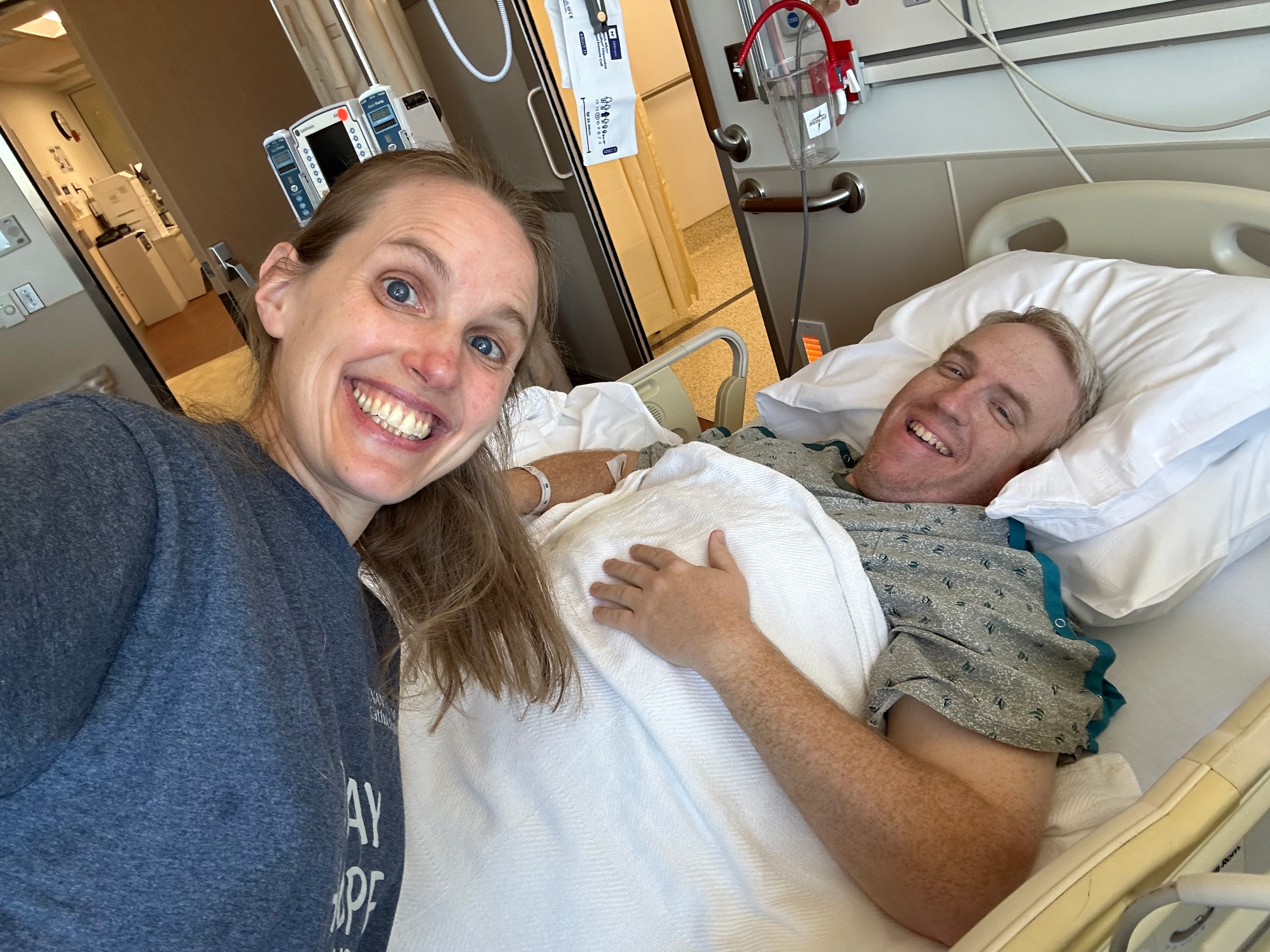
The morning of surgery was a fairly relaxed one. I was not the first case of the day which afforded me the luxury of a slow pace. The only agenda items were to wipe down my entire body with special disinfecting wipes, don a new gown, relax in bed with another set of fresh linens, and be wheeled down to the pre-operative area at some point. I was able to do all of these things without much effort at all.
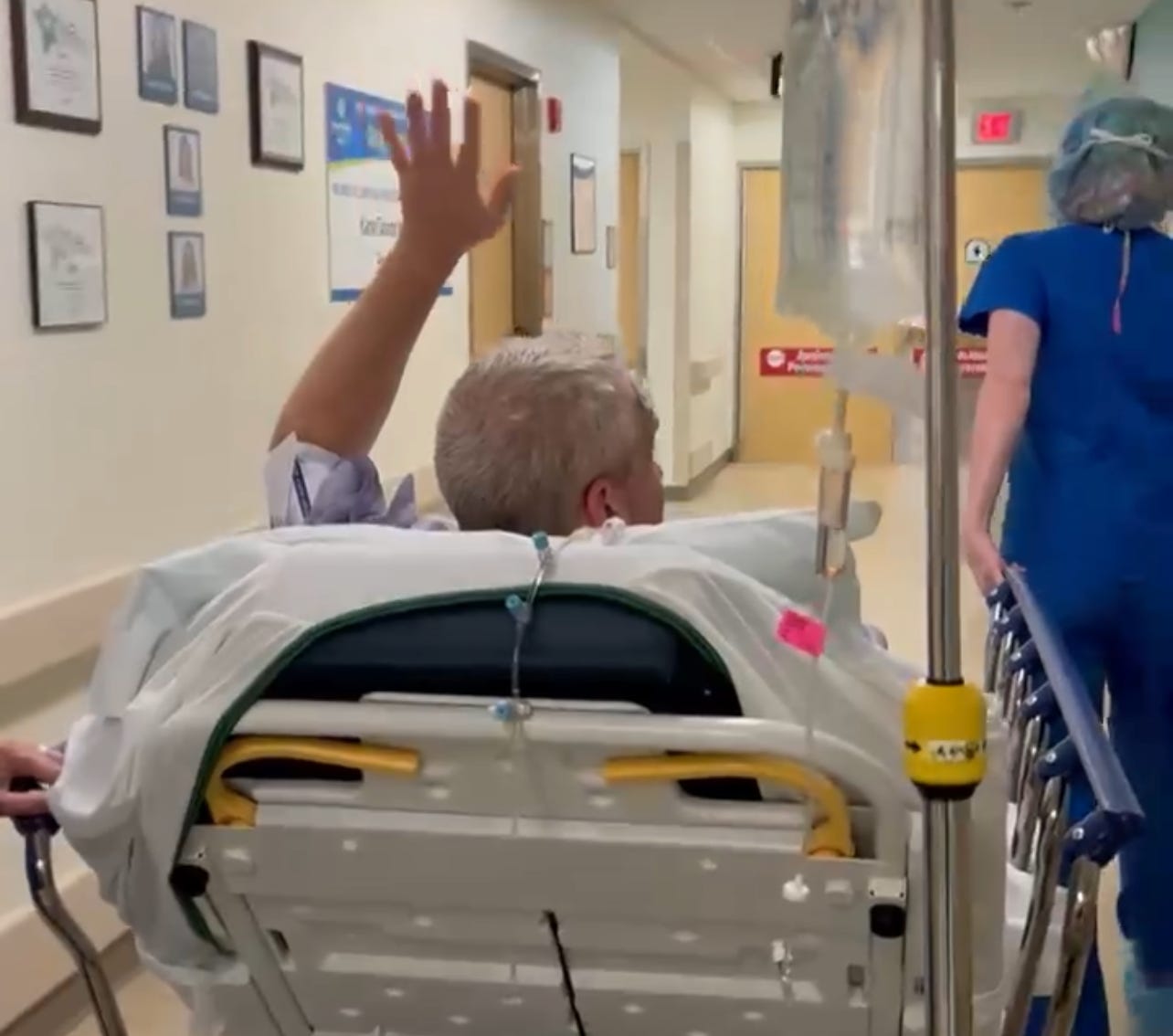
Even my journey to the operating room was fairly easy. They wheeled me into the operating room on a gurney, but asked if I could transfer myself to the operating table. It was an easy slide from the gurney to the table and I was happy to do it myself. Up until this point, being a surgical patient was pretty easy.
One more simple task remained. It was time to take a deep breath from the mask they put on me, relax as the IV meds were pushed, and count backwards from ten. I think I made it to seven.
Waking Up
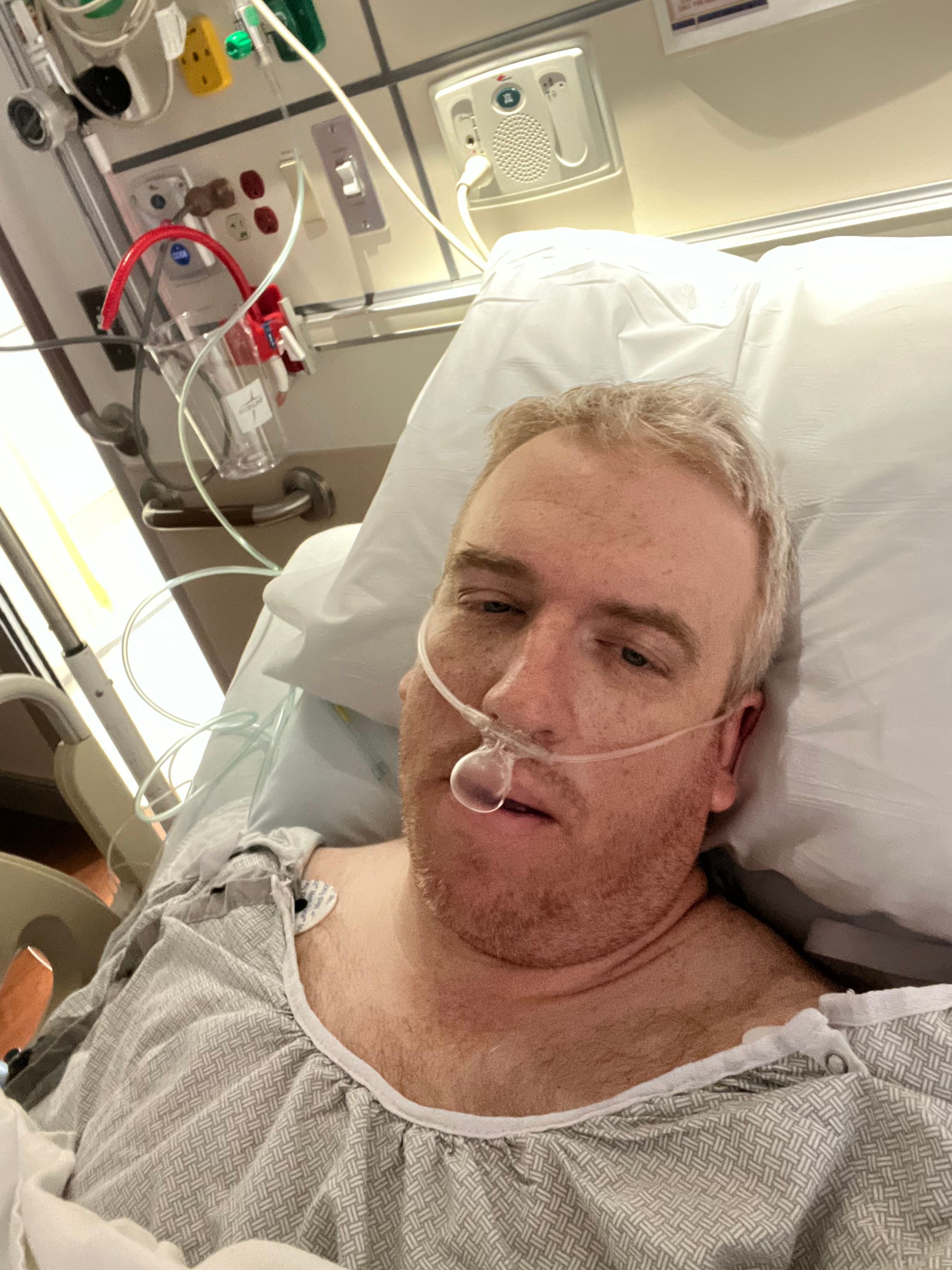
I don’t really remember waking up in the PACU (post-anesthesia care unit). I vaguely remember being wheeled into my hospital room. Somehow I was already in my hospital bed when they wheeled me into the room. I hurt. My abdomen was incredibly sore. My shoulders had a radiating pain. I felt nauseous. My nurse told me to rest. She gave me a button to press if the pain became overwhelming. Shift change was fast approaching and a new nurse would be checking in with me in just a few minutes.
Soon, a new nurse came into my room and introduced herself. She would be my nurse for the night shift. I didn’t anticipate we would interact much. I felt miserable and wanted nothing more than to rest. She had a different plan.
“Adam, the doctors want you to get up and walk within four hours of your surgery. We need to do this by 10:00 pm. When would you like to walk?”
This was ludicrous in my mind. I did not want to walk. Nor did I want to sit up in bed. I just wanted to lie still and try to sleep the pain away. This was not an option.
I proposed she go check on all of her other patients and then come back. I wouldn’t be ready, but, hopefully, she would have more time to spend with me if she had already settled her other patients. She agreed to the plan.
Shortly before 9:00 pm, my nurse arrived with a gait belt, a walker, a wheelchair, and a plan. I would sit up in the bed, swing my legs to the side, plant them on the floor and stand up. I would grab the walker. She would hold onto me with the gait belt wrapped around my waist (while also managing my IV pole). Beth would follow us with the wheel chair, ready to scoop me up and take me back to the room if I necessary.
We did not make it to step one. I went to sit up in the bed, something I’ve done countless times since I was a baby. The muscles did not work. I could not get my abdominal muscles to function no matter how hard I tried. Trying to use these muscles did nothing more than intensify the pain.
“Adam, can you sit up?”
“I cannot.”
My nurse was prepared for this. Some of my muscles had been cut. Others had been manipulated. It was not a surprise to my nurse that I was unable to sit myself up in the bed. She assisted me, elevating the bed and grabbing my arm.
“Adam, can you turn your body and swing your legs over the side of the bed?”
“Possibly, but I will need help.”
Beth and my nurse each held out an arm for me to grab to stabilize myself. I was able to turn my body and put my feet on the floor. The pain was excruciating.
“Adam, can you stand up?”
I could not.
My nurse grabbed me underneath my shoulder, told me to place my hands on the walker, and helped lift me out of the bed. I was standing and I could not believe it. It was now time to walk.
There was no set distance goal. We were going to walk as far as I could, turn around, and come back to the room. I slowly made it to the door and out into the hallway. I made it about four feet outside of the room and felt like I was going to vomit. I urgently begged to get back to the room as quickly as possible. I wanted to go back in the wheelchair. My nursed assured me we would make it back, but we would be walking.
We did make it back to the bed where they sat me down as I started to dry heave. Both Beth and my nurse did all they could to help me through the heaving. Each contraction of my stomach sent immense waves of pain throughout my body. It was unbearable. Thankfully some antinausea medicine quickly counteracted these lingering effects from the anesthesia and things seemed to settle.
Everything about what we had just done felt like a failure. I could not sit up on my own. I could not get out of bed on my own. I could not walk without assistance. I could not walk more than fifteen feet.
My nurse settled me back in my bed and administered my pain meds. She gave me a button to push when the pain was overwhelming. She told me not to be shy about pressing it. The machine would not allow me to have more medicine than the doctors had prescribed. It was time to try and sleep. More work of recovery would be waiting in the morning.
Once again, I could not.
I tried to sleep, but could not get comfortable. I tried to get comfortable, but could not move on my own to do so. Each attempt brough mounting frustration and increasing pain. The entire night was a cycle of trying, failing, and giving up further attempts.
On top of this, I developed a new problem. I had the hiccups and I could not stop them. I learned that they had inflated my abdomen with carbon dioxide during the surgery so that the surgeon could better see the area of concern. The gas now needed to escape. Some people pass it in the natural way. Others burp to release the excess gas. I had the hiccups for four hours. Each one caused a shooting pain in my abdomen. I was powerless to stop it.
My doctors came in the next morning for rounds. They joked that I must have set a record by pressing the pain button two-hundred eight times. They also shared some upsetting facts.
The doctors made it clear that the only way out of the pain would be through the pain. Walking would help my body process the carbon dioxide faster. This would relieve the shoulder pain where the gas had settled. Walking would also reactivate the abdominal muscles which would reduce some of the abdominal pain. Coming off the narcotic pain medicine would help me heal faster. Narcotic pain medicine can make you tired, causing you to work harder to get up and walk. I would heal, but more drugs very clearly meant things would take more time.
“I know it sounds counterintuitive to do this, but doing the very thing that is making you hurt will actually help you heal faster.”
I did not have much confidence. The entire night had been a lesson in humility. I couldn’t do anything on my own. How would I do this?
They had an answer for this question. Together.
My nurse would walk with me. Beth would help too. My job was to surrender and let them lead me. Would I be willing to let them push me beyond my perceived limits?
Goals were set. It was time to move.
What Love Feels Like
Post-op day one had a simple goal. Get up two times and walk a lap around my side of the unit. Something I would normally be able to do in five minutes or less would now take thirty to forty-five minutes with a great deal of assistance. I knew it had to be done if I was going to heal and return home to Beth and the children.
I had asked my nurse if I could listen to music in my earbuds as we walked. Beth grabbed my phone and I turned to a track from Christian artist TobyMac.
“I am tired, I am drained, but the fight in me remains. I am weary, I am worn, like I’ve never been before. This is harder than I thought, harder than I thought it’d be. Harder than I though, takin’ every part of me…” -Love Feels Like (TobyMac)
By the end of the day shift, I had somehow made it. Two walks were completed. The pain button was taken away. My body was starting to give me subtle clues that the doctors and nurses were right. Getting up to do what seemed impossible was actually making things more tolerable.
Post-op day two had similar goals. We aimed to do four walks around my side of the unit. We wanted me to spend more time sitting in the chair than lying in the bed. God continued to give me the necessary drive to move and heal through the lyrics of TobyMac that now played on repeat with each walk.
Despite the good progress I was making with my walks, there was still much I could not do on my own. I could not get out of bed without assistance. It was incredibly difficult to stand up from the chair in my room without assistance. I had difficulty cleaning myself in the bathroom and required assistance. I was restricted from lifting anything heavier than a gallon of milk.
Empty’s Never Felt So Full
“Harder than I thought, so much harder than I thought it’d be, but empty’s never felt so full… Poured out, used up, still givin’, stretching me out to the ends of my limits, this is what love, this is what real love feels like.” -Love Feels Like (TobyMac)
I discharged from the hospital on Saturday, June 1, 2024. The doctors said I had made enough progress in healing that I was able to go home. But two words came home with me.
“I cannot.”
These words haunted every aspect of my life. The physical limitations remained. It was difficult to leave the house. The time I would spend on recovery activities (like walking) would drain me of energy, making me particularly useless for the rest of the day. I was told many times that healing is a process and that the pace is sometimes slow.
I frequently questioned whether or not it would actually progress. What would I have to offer the world? Would I be able to help Beth with the kids? Would I be able to do “dad things” with our family? Would I be able to return to the radio show? They kept telling me yes, but it was difficult to believe in the midst of the trial.
At some point in my radio career, I was introduced to the life of Blessed Chiara Badano. Blessed Chiara was born in 1971 and died at the age of 18 in 1990. She had been diagnosed with osteogenic sarcoma at the age of 16. It is said that she suffered great pain as a result of her cancer. She had a simple prayer that I now treasure.
“It’s for You Jesus. if You want it, I want it too.” -Blessed Chiara Badano
I started to internalize this prayer one night in my hospital bed. But questions came with it.
“Jesus, why do you want it?”
“Jesus, what are you asking of me?”
“Jesus, what am I supposed to do?”
I found answers in my journey with “I cannot.” It’s not that the ceiling tiles of the room split and a voice from Heaven thundered, but several thoughts kept repeating over and over as I asked these questions. Jesus was inviting me to see how dependent I was on Him. He had not left me abandoned. He had come in simple, ordinary ways. He responded through the care of my nurses and medical team. He responded through the graces of our marriage. He responded through the love of our children. He responded through our extended families and through the community that brought us meals and helped with household tasks. There was a very certain reassurance that came to me in prayer.
“I am with you. You are not alone.”
There was a particular day following my discharge where I was well enough to be left home alone while Beth and the children attended a family gathering. I had a hankering for a particular meal. It could not be ordered for delivery. Pride kept me from asking friends if they would be willing to go to the restaurant and pick up this particular meal for me. After all, I had plenty of food at home. Through some grace, I started praying, “Jesus, as much as I want this meal, help me to want You more.”
Perhaps that was it. The time I spent in bed unable to move and the time I spent at home unable to go out both afforded me more time for prayer. I still struggle to adequately put into words the depth of this experience. I spent every ounce of energy I had on the work of healing. I poured out my soul and emptied it before Jesus, asking for some understanding of why He permitted my cancer and this surgery. His grace gave me the strength to invite Him into my brokenness. Somehow, when I was at my lowest, Jesus filled the voids created by my limitations.
As I look back at this first surgery, I recall a specific moment during one of my walks around the unit. There I was, pouring every last ounce of physical, mental, emotional, and spiritual energy into a simple walk down a hallway. It took everything I had to give to make it happen. Sure enough, it happened and within hours I felt a noticeable change in my symptoms. My shoulders hurt less. My abdomen was not as uncomfortable. My confidence was higher. I was not afraid. God asked me to let go of a lot and turn myself over to His care. I emptied myself, and “empty’s never felt so full.”
This reflection is part of an ongoing series of reflections on growing in faith through my journey with suffering.
Reflection Questions
Where in my life am I being asked to say, “I cannot,” instead of forcing myself to push through?
What emotions surface when I need to depend on others—and what might God be teaching me there?
How has God shown His presence through people caring for me, even in ordinary or uncomfortable ways?
What might it look like to surrender today without knowing the outcome?
Where might Jesus be saying to me, “I am with you. You are not alone”?
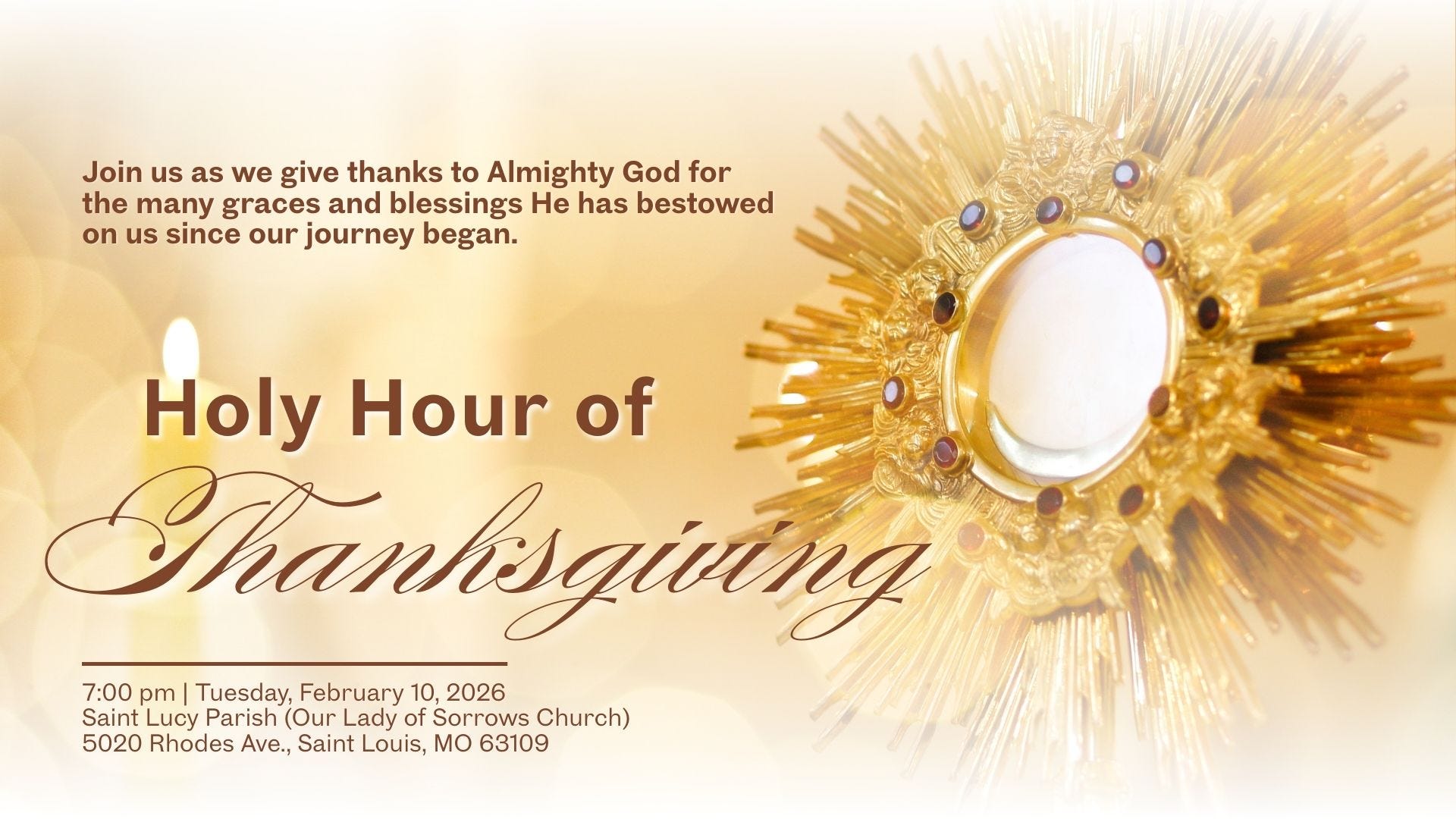
As we continue to walk this road, our family has been deeply aware that every step—whether strong or assisted—is a gift. In gratitude for the many graces God has poured out since this journey began, we invite you to join us in prayer.