
Hope Witheld
Surrender when the future is uncertain.

Part 6 of the Don’t Waste Your Suffering series
Active surveillance is an unsettling term.
Every other illness in my life had been met with action—tests, treatments, procedures, surgery. Something was always done.
This time, the plan was to do nothing.
The doctors would watch. They would wait. And they would intervene only if something changed.
Twelve weeks eventually passed. Some days felt longer than others. Some weeks seemed to pass faster than the week before. We had successfully watched and waited for three months without new symptoms of cancer growth. It was now time for another MRCP to make the best observation possible.
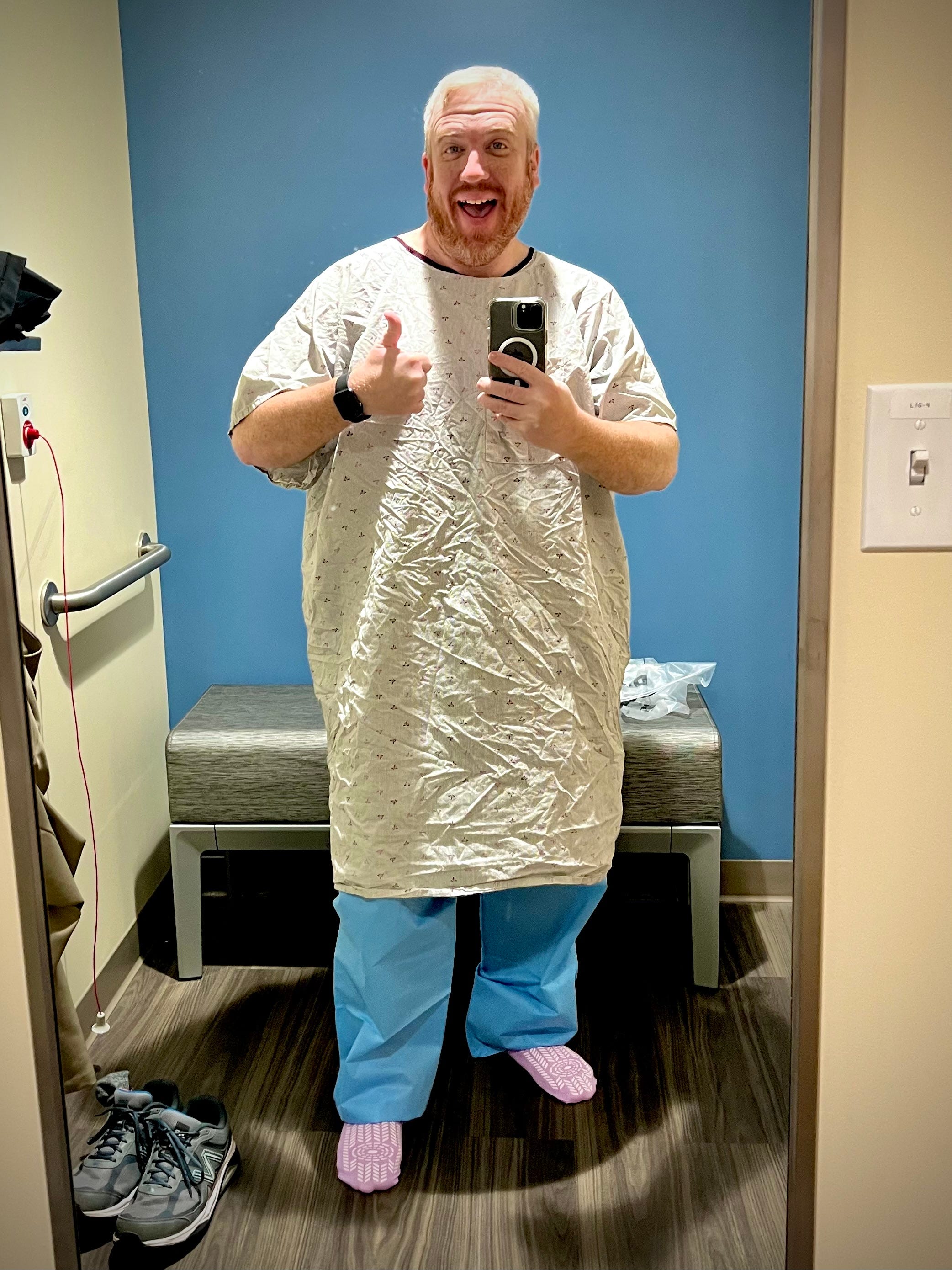
An Unexpected Phone Call
Despite the planned “inactivity”, I still had monthly appointments with my oncologist. Each was an opportunity to check-in, ask questions, and confirm that we wanted to keep moving forward with active surveillance. I knew that I would have an appointment with my oncologist in December following the MRCP. It was planned. We would go over the results together and make a determination about what would happen next.
I was somewhat surprised when the patient portal app notified me of an upcoming telehealth appointment with the hepatobiliary surgeon. What was left to talk about? Surgery was not an option. The number of tumors seen on my scan made success unlikely. The surgeon was not willing to offer surgery as an option. I did have a few questions about a symptom that had become rather annoying. Perhaps she could assist in finding a remedy for that.
The appointment started like any other. The surgeon asked how I had been doing since the last time we spoke. She asked about any new symptoms or changes of any kind. I shared that I was surprised she had setup the appointment and told her I did have a few questions.
My first question was about the appointment itself. I was happy to speak with her, but I still did not understand the reason for the call. Everything discussed to this point had been covered by my oncologist. I was not prepared for what happened next.
The surgeon started discussing my most recent MRCP scan. She reminded me that in April we thought we saw five tumors. We recalled my first appointment with her where I learned what we see in a scan should normally would be doubled in preparing for surgery. They usually find at least twice as many tumors once they get inside and scan the liver with an ultrasound probe. She reminded me that in September we saw eight tumors on the MRCP and how they verified there were actually eight on my original scan.
“Adam, here is the remarkable thing. Your tumors have not grown since April.”
She was encouraged that not only had the existing tumors remained unchanged and no new tumors had grown, but also that this happened while I was foregoing treatment for several months. It wasn’t unheard of, but she gave me the impression it was less common.
“What’s the bottom line?” I asked.
“Adam, this gives me more confidence that the eight tumors we see are the only tumors present. I would be willing to offer the surgery if your next scan in March yields the same results.”
Renewed Fervor for an Unchanged Intention
Our prayers throughout the journey had been fluid. At first we were praying the symptoms were caused by something simple and easily remedied. Our prayers during the biopsy phase were that the tumors would be benign. Once malignancy was confirmed, we prayed that it would be curable. We prayed that the planned surgeries would successfully remove all of the cancer from my body. And we prayed for a miracle when the offer to perform liver surgery was rescinded.
Throughout all of this, the intention had remained the same. “…we ask for the grace of complete physical healing.” Praise God if He wanted to provide a miraculous cure. Praise God for the gift of modern medicine if the cure would be achieved through surgeries and therapies. We were happy to leave the “how” up to God. We were very particular about the “what”.
It is difficult to describe the hesitation I felt inside. Wasn’t this good news after all?
I wanted to be excited. If nothing else, the cancer had not grown over the past three months even though I was not receiving the treatments. Surely we could breathe a sigh of relief over that fact. But now we had to see if it would remain stable for another three months. The doctors were very clear. Anything was possible. That is all we know with certainty.
Hope of a cure had left me that October. A large part of me didn’t want to hold out for a miracle. A miracle would take the control out of my hands. A surgery may or not be successful, but at least we could say we tried. What if God did not grant a miraculous cure? Would that mean He did not try or that He did not want to grant one? And if not, why not?
I was not ready to hope again. I wanted surgery to be possible, but I did not feel the strength inside me to raise my hopes and then have them dashed in three months.
There was a pragmatic attitude that could be adopted. The phone call with the surgeon did not actually change anything. She was unwilling to offer surgery prior to the call. The prospect of surgery being a possible option in the future did not change the fact that it was not an option that day.
A friend and I were discussing the update a few days after the telehealth appointment. He asked if we were now praying that the next scan would allow for surgery. I hesitated to answer. My friend was curious. Why would we not pray for this outcome? After all, our overarching intention had not changed. We were asking God to grant me complete physical healing. Why start being selective about how we wanted God to answer this prayer?
My friends admonitions were clear. Focus on the outcome, not the method. Keep asking God for complete physical healing. Let Him decide how He would answer that prayer.
They have no wine. I have cancer.
As I recall this part of the journey, I think of a homily I once read by Pope Benedict XVI given at Kapellplatz, Altötting, on September 11, 2006 . He was preaching about Jesus’s first public miracle at the Wedding Feast of Cana.
“Mary does not really ask something of Jesus: she simply says to him: ‘They have no wine’ (Jn 2:3).”
I had never considered this fact before reading Pope Benedict’s words. I had missed the noticeable absence of a question mark. Mary had not asked Jesus to do anything.
Pope Benedict continued.
“Now the bride and groom find themselves in trouble, and Mary simply says this to Jesus. She doesn't ask for anything specific, much less that Jesus exercise his power, perform a miracle, produce wine. She simply hands the matter over to Jesus and leaves it to him to decide about what to do.”
Pope Benedict reminds us that the Blessed Virgin Mary gives a beautiful example of trust. I had cancer. I had been told it was inoperable. Then I was told surgical resection might once again be an option. I did not know what to do. Was I prepared to ask for nothing and hand the matter over to Jesus? Did I trust Him enough to leave it in His hands?
A Prayer from a Favorite Saint
St. John Henry Newman has long been one of my favorite saints (even before he was canonized). His writings are treasures of faith. Among his writings, there is this beautiful reflection.
“God has created me to do Him some definite service. He has committed some work to me which He has not committed to another. I have my mission. I may never know it in this life, but I shall be told it in the next. I am a link in a chain, a bond of connection between persons. He has not created me for naught. I shall do good; I shall do His work. I shall be an angel of peace, a preacher of truth in my own place, while not intending it if I do but keep His commandments. Therefore, I will trust Him, whatever I am, I can never be thrown away. If I am in sickness, my sickness may serve Him, in perplexity, my perplexity may serve Him. If I am in sorrow, my sorrow may serve Him. He does nothing in vain. He knows what He is about. He may take away my friends. He may throw me among strangers. He may make me feel desolate, make my spirits sink, hide my future from me. Still, He knows what He is about.” -St. John Henry Newman
In the midst of my uncertainty, He knows what He is about. In my refusal to hope, He knows what He is about. In my fear, He knows what He is about.
Reflection Questions
Where in your life are you being asked to “watch and wait” rather than act?
Is there an outcome you are still willing to pray for—but no longer feel ready to hope for?
Do you find it easier to trust God with methods or with outcomes?
What would it look like for you to say, “They have no wine,” and leave the response to Christ?
Is there a place where fear has quietly shaped the way you pray?
How do you ask God to help you overcome fear?
If one of these questions speaks to you and you’re willing, I’d love to hear your reflection in the comments. Your words may help someone else who is learning how to wait.