
Choosing What Hurts
Learning to endure suffering for the sake of love.

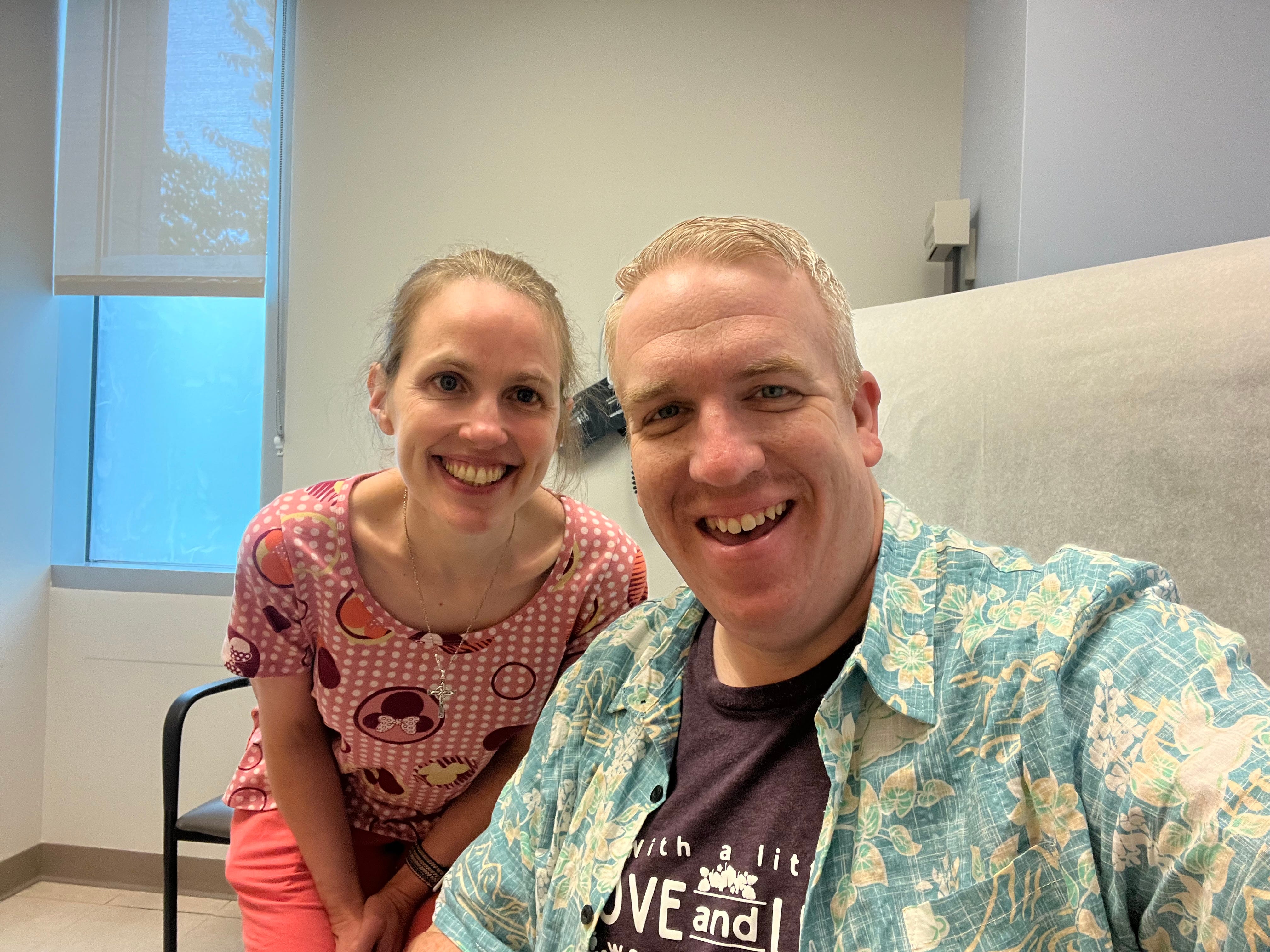
Have you ever willingly chosen something you knew would make you miserable—trusting that it was the only path toward healing? For me, that choice was always the dentist. I don’t have great teeth, I don’t like needles, and I grow restless in the chair whenever serious work is required. Still, I go—because the alternative is far worse. What I didn’t know then was how much those small, uncomfortable acts of endurance would prepare me for a far more difficult “yes” called cancer treatment. Only later did I begin to wonder if God had already been training my heart for suffering I could not yet see.
Injection Therapy
Neuroendocrine tumors are a different form of cancer. Chemotherapy is not the usual first line treatment. My oncologist had explained to me that he wanted me to start a monthly injection of a somatostatin analogue called Lanreotide. I had already learned a little about the injections. They are a hormone analogue that have been successful in halting tumor growth. They do not shrink or kill tumors, but they could potentially stop growth for a period measured in years.
Author’s Note: Unpleasant side effects are part of the story. I do share some “bathroom issues” in this post. I do my best to avoid graphic descriptions, but I ultimately feel that the side effects are a necessary part of this post.
Like any drug, somatostatin analogues have a risk of side effects. My oncologist went through them with me before I signed the consent for treatment. Some patients experience fatigue following the injection. Others may have a mix of diarrhea and steatorrhea (loose, clay-colored, oily stools). Allergic reactions are also possible. My oncologist said that some people do not experience side effects, the majority of people have very mild side effects lasting a day or two, and others have severe side effects. There was no way of knowing which group I would be in before receiving the injection.
The plan at this point was simple. I would start SSA injections in June of 2024, receiving an injection every 28 days for a course of 4-6 injections. My response, and more importantly my tumors’ response, to these injections would dictate when and how we would proceed with surgery to remove the metastatic disease from my liver.
I received my first Lanreotide injection on June 26, 2024.
We Were NOT Ready for This
The first few hours after my injection felt normal. There was some lingering pain at the injection site, but that was the extent. I left the cancer center and headed into work. After about two hours at work, my assistant asked me if I was feeling alright. She mentioned that I was starting to get a “glassy” look in my eyes and that she could see my energy was depleted. She accurately described exactly how I felt. Brain fog was quickly taking hold of me. I went home and went to bed.
I woke up after a few hours and did not have much of an appetite. Beth prepared me some scrambled eggs and urged me to eat them to get some protein into my system. I did. I soon returned to bed. Nausea was starting to take hold and I was hopeful I could sleep my way through it.
I distinctly remember waking up in the early morning with an urgent need to use the bathroom. I made it to the bathroom with what felt like seconds to spare, but then nothing happened. I remained seated for a few moments as I did not have enough energy to stand. Suddenly, everything moved. It felt as if my entire digestive system emptied itself at once. This was my first experience with steatorrhea. It would not be my last. I returned to our bedroom and soon was in the throes of severe abdominal cramping. I somehow managed to get back to sleep.
This cycle repeated several times throughout the early morning. I notified my boss that I would not be able to come to work. I called my oncologist the next morning and his nurse assured me they would send in prescriptions to help with the nausea and cramping. She suggested an over the counter medicine to help with the steatorrhea. The medications helped alleviate most of the symptoms. The fatigue persisted. We were hopeful the worst had passed.
On June 28, 2024, I was still incredibly tired. The side effects had lessened, but enough remained to keep me home again. A new side effect crept in that afternoon. I described my first post-treatment migraine as “the worst headache I’ve ever had in my life”. It was bad enough that the oncologist covering the after-hours call sent me to the emergency department out of concern I could be having an aneurysm or stroke. A head CT showed no evidence of either. I was given non-narcotic pain medicine and was sent home. By the time I woke up the next morning, the nausea and cramping had abated. My trips to the bathroom were returning to normal. The migraine had ended and showed no sign of returning.
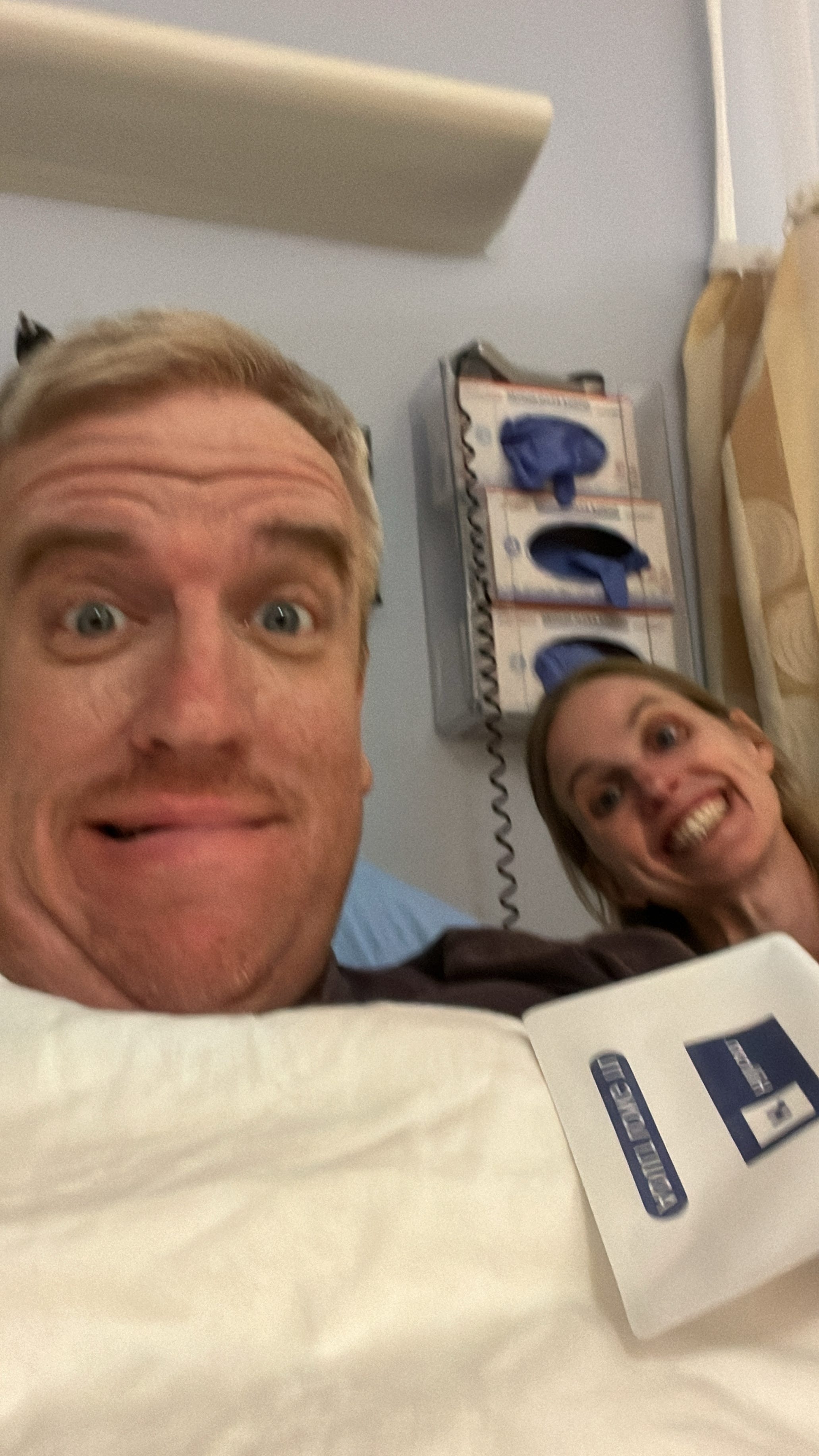
This cycle became the new “normal” for the days following each injection. Stronger anti-nausea medication and a combination of migraine medication supplemented with caffeine also helped keep me out of the emergency department after my third injection. There was a cost associated with these medicines. Particularly burdensome was the new anti-nausea medication. It was known to cause excessive drowsiness. I fell asleep within two hours of taking it. Beth had to wake me up around 7 pm to encourage me to eat something. I didn’t wake up again until 10 am the next day. I ate a small meal at that time and went back to sleep. I finally woke up for a few hours around 5 pm.
Choosing to Endure
“Why am I doing this?”
That is a question I asked myself with each injection and its side effects. Certainly there was something else we could try that wouldn’t be as miserable. I did not want to do this.
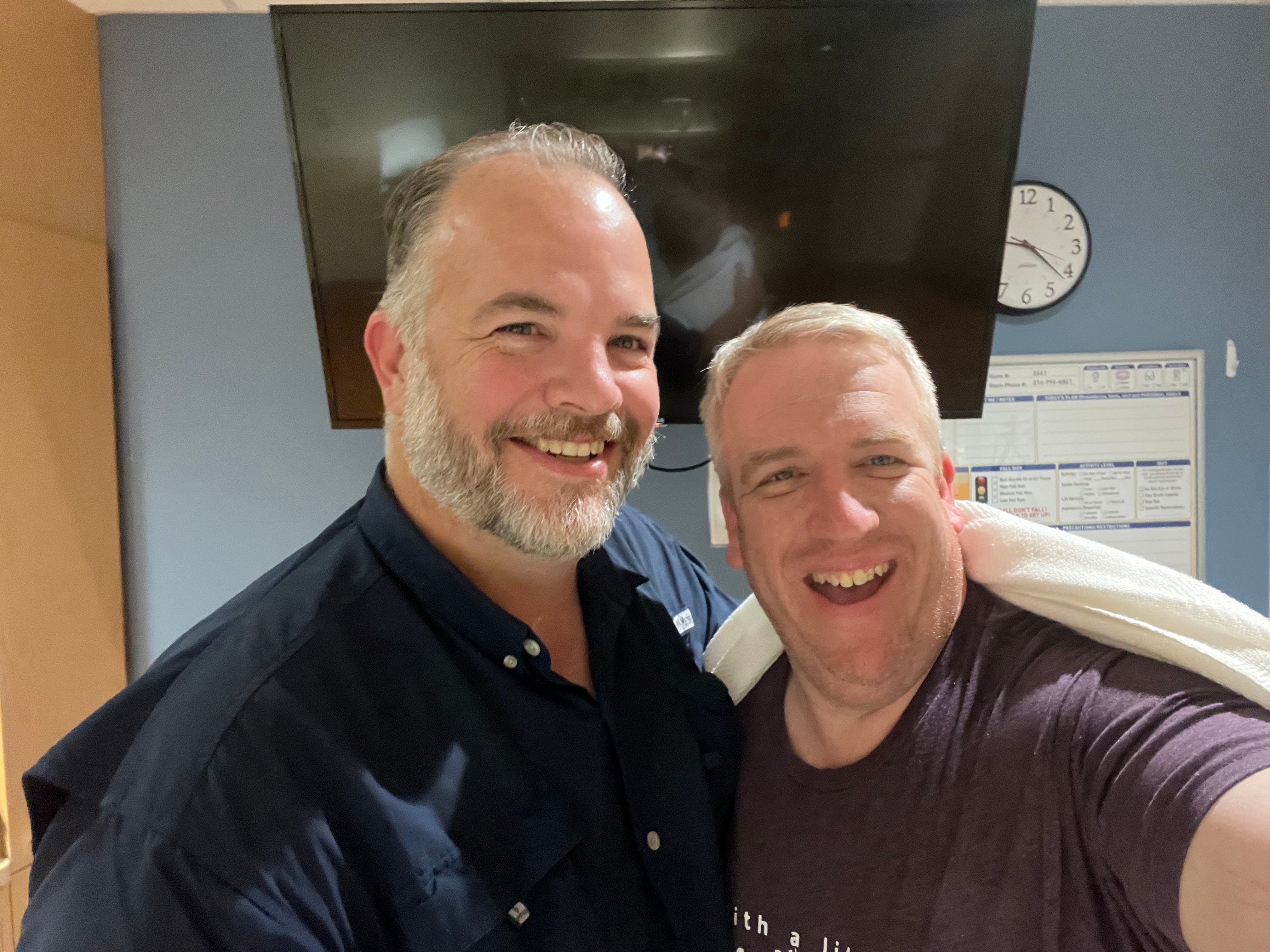
My good friend Brian came to visit me in the hospital while I was waiting to have my first surgery. At a certain point he shared a story about a gentleman who was also going to undergo surgery. The gentleman had been talking with a friend and in the course of the conversation mentioned, “I just pray God would take care of my family if something should happen to me.” The friend replied, “who do you think has been taking care of them this entire time?”
I started thinking about my vocation as a husband and a father. God called me and He called Beth to marriage. We fell in love and, feeling called to the vocation of marriage, chose to marry one another. As part of our vocation, we lovingly welcomed five children into the world and surrendered one lost in the womb to the merciful love of God. This has been “Plan A” for our call to holiness. This is how God has worked to care for our family up until this point. This is why I consented to the treatment.
Beth and the children were certainly reason enough to endure the side effects that came with each injection, but there was something more that could be done.
The Redemptive Power of Suffering
Another friend had reminded me of a quote from St. Teresa of Avila. “The lukewarm do not embrace the cross; the merely drag it along.”
What does it mean to embrace the cross? In answering this question, I think of another quote from the late Cardinal Archbishop of New York. John Cardinal O’Connor was known for saying “Do not waste your suffering.”
Suffering is something we all encounter in our lives. Sufferings can vary in their difficulty. Some are great. Others are small. But all suffering can be offered to God. Whether it’s for our own sanctification or for a soul in purgatory, we can make a gift of our sufferings and do some good for the Church and the world.
Many of us have a favorite story or scene from a movie where a hero offers himself or herself in place of the one whom they love. Beyond the fiction, real life is filled with these stories as well. For instance, take the story of St. Maximilian Kolbe. St. Maximilian Kolbe was arrested by the Gestapo during World War II and ultimately ended up in the Auschwitz concentration camp. A group of men were chosen by the guards and sentenced to death by starvation. St. Maximilian Kolbe was not among those selected, but offered himself in place of one of the prisoners who had a family. He was executed by lethal injection after enduring starvation and dehydration for two weeks.
The Church teaches that the effects of sin affect us all. It does not matter if we are the ones committing the particular sins, which we all do in the course of life. Whether it is the stains of original sin, the consequences of our sins after baptism, or the sins of those around us, the effects can be seen far and wide. Look at the disparity between the poor and the wealthy. Look at the starvation that happens throughout the world. Look at the genocides that have been and still are committed in the world. Look at the scourge of violence in our culture. The list goes on and on.
Christ is the remedy for the effects of sin. He alone offers us salvation through His passion, death, and resurrection. We cannot be saved without Him and He does not need us to accomplish His salvific work. And yet… He invites us to participate in the work of the Cross. He invites us to unite our sufferings to His so that they can be offered in reparation for sin. Whether it is for a particular intention, for a soul in purgatory, or for our own purification, Jesus offers us an opportunity to give meaning to our suffering as we offer it to Him.
For years, the phrase “offer it up” seemed rather cliche to me. It felt more like a polite way of saying, “get over it.” The side effects of my injections became the catalyst to abandon this view and get intentional. After all, I wasn’t able to leave the house and I wasn’t able to do much around the house either. So I started listing off intentions with each side effect.
There are some great stories of heroic suffering in the Church. St. Maximilian Kolbe is one.
I also think of St. Jose Sanchez del Rio who was offered the chance to escape execution by firing squad if he would renounce Christ. He instead proclaimed, “Vivo, Cristo Rey!” (“long live Christ the King!”).
Venerable Servant of God Emil Kapaun served as an army chaplain during the Korean war and had an opportunity to evacuate before his fellow troops were captured. He chose to stay so that he could minister to them in the P.O.W. camp where he brought hope, saved lives, and touched souls before ultimately dying in the camp. As his captors took him to the “camp hospital” where he would be left to die, Fr. Kapaun turned to the prisoners and said, “Don’t worry about me. I’m going where I always wanted to go, and when I get there, I’ll say a prayer for all of you.”
These two heroes offered something extraordinary for the sake of our Lord. I, however, found myself in the bathroom offering nausea, cramps, and insufferable bowel movements for our Lord. I felt ridiculous. But then there was that phrase from Cardinal O’Connor exhorting us not to waste our suffering. I started thinking about my sufferings from the perspective of a soul on the cusp of purgatory. What if I was in their place? Would I really say, “Lord, I want to leave purgatory and get into heaven, but could You pick a different suffering? Does it have to be his visit to the bathroom?”
No. Heaven is heaven. I would happily take the ridiculous if it helped me cross the finish line into an eternity with God.
Another friend had reminded me of a quote from St. Teresa of Avila. “The lukewarm do not embrace the cross; the merely drag it along.”
We do not usually get to choose the crosses we bear. We can choose to embrace them. We can choose to offer them for some greater good. Even if they seem ridiculous, we can turn our sufferings over to God and leave it to Him to know what to do.
Offering my side effects from each injection in prayer did not lessen their severity. But God’s grace transformed them, giving them meaning and purpose. Through this grace, God gave me the strength to endure and suffer with Him for the good of souls.
“Unless you are willing to do the ridiculous, God will not do the miraculous. When you have God, you don’t have to know everything about it; you just do it.” -Mother Angelica
Reflection Questions
Where in my life am I avoiding something difficult that could lead to deeper healing—physical, spiritual, or relational?
Have I ever chosen short-term misery for a long-term good? What sustained me through it?
What crosses in my life feel small, embarrassing, or “ridiculous”—and do I believe God can use those too?
Where might God be inviting me to stop dragging the cross and begin embracing it?
What suffering am I being asked to consent to—not because I want it, but because love requires it?
If this stirred something in you and you’re willing, feel free to share a brief reflection in the comments. Your story may be a quiet encouragement to someone else.
Thank you, Adam, for sharing your experience. It makes me realize all the opportunities I’ve wasted. Hope to remember from now on. ❤️